


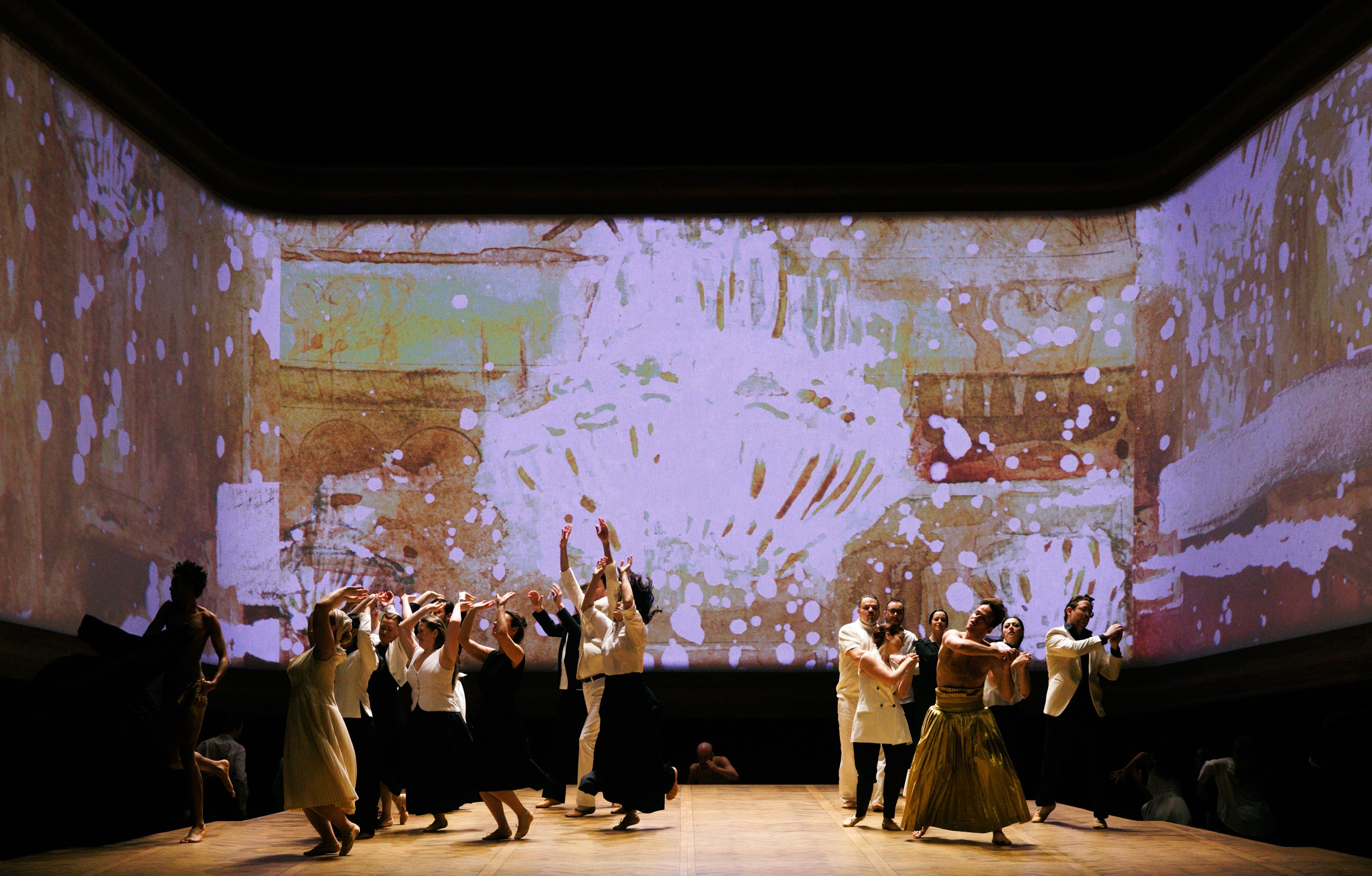


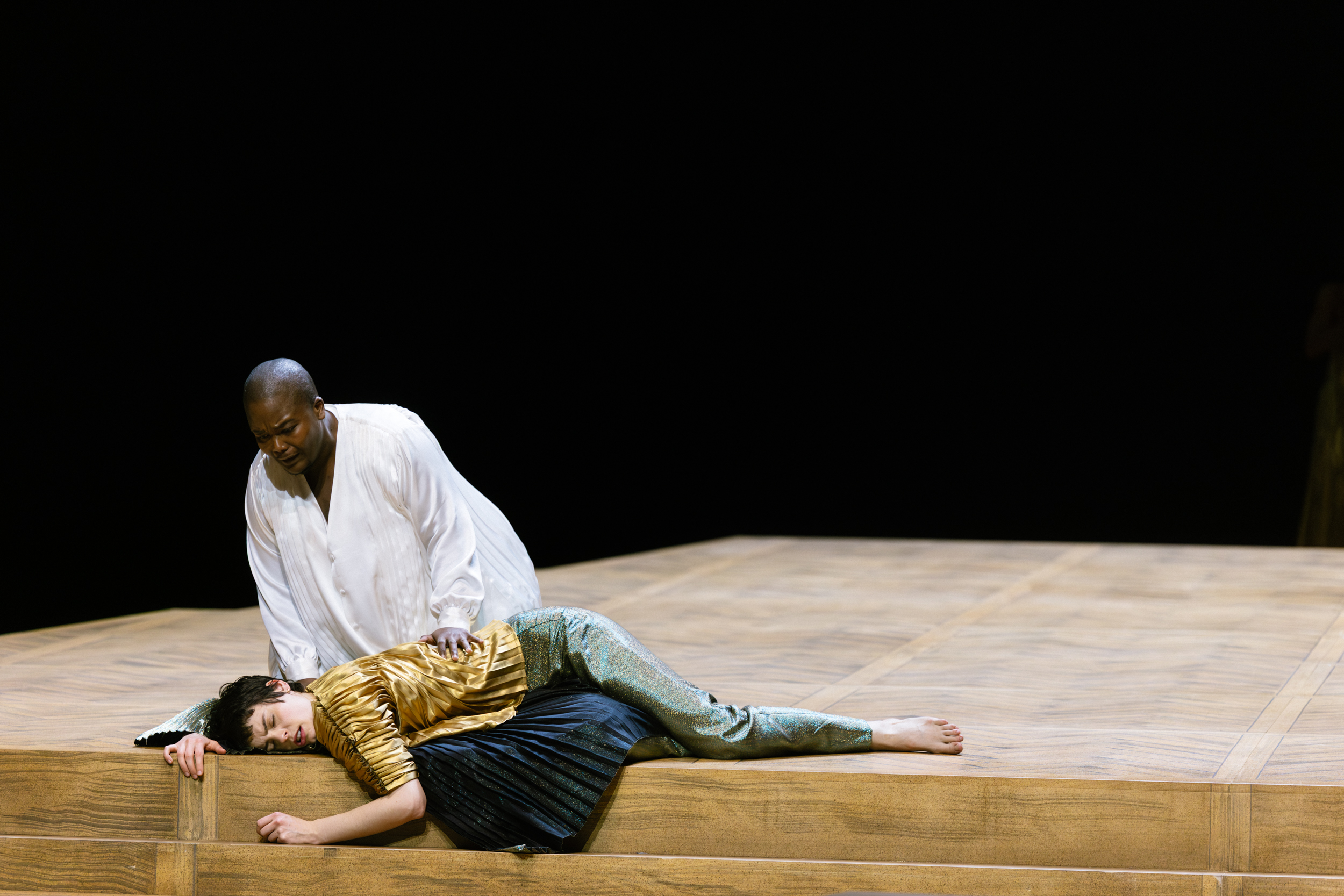
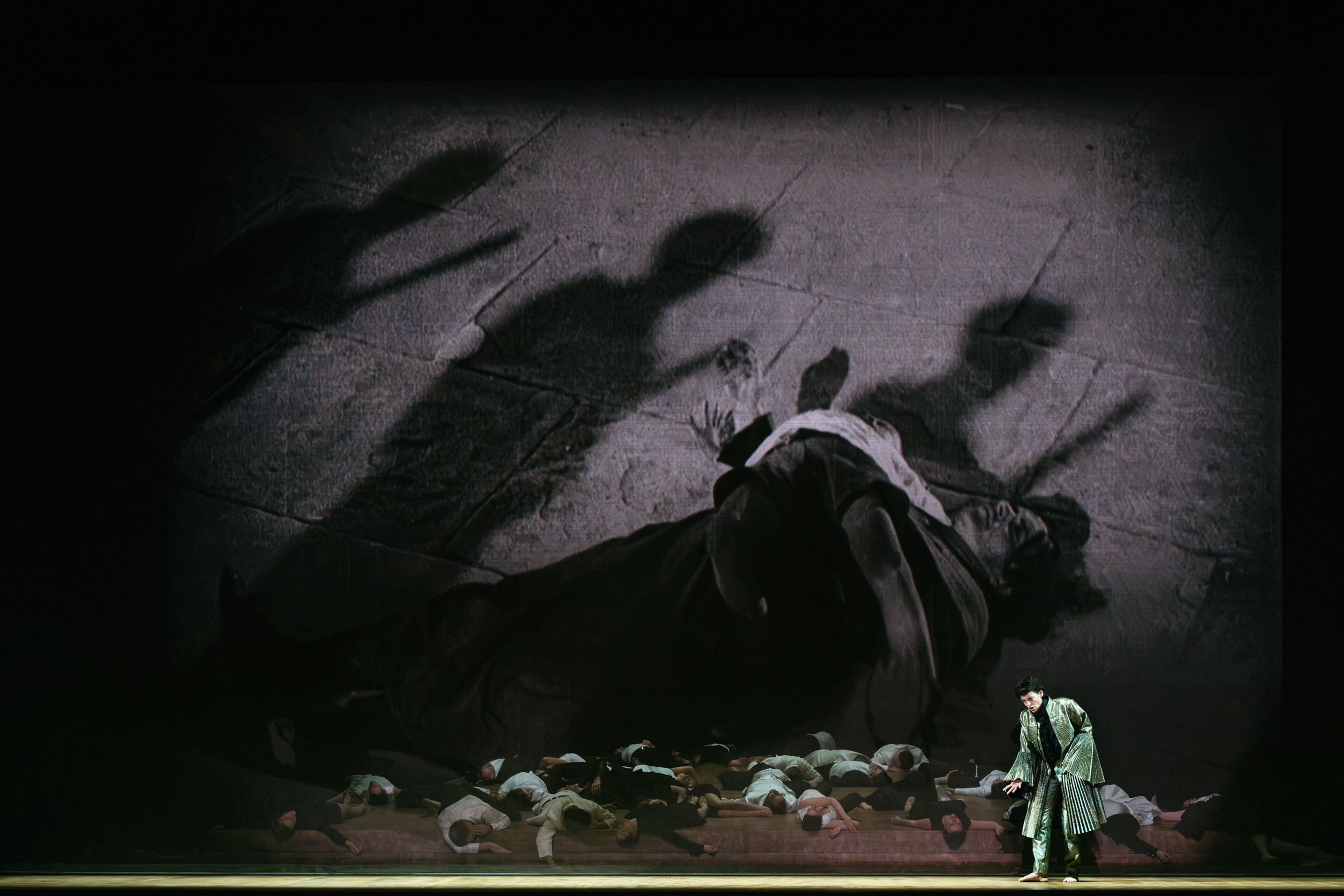


La Clemenza di Tito
OPERA SERIA in two acts
Text: Pietro Metastasio
in an adaptation by Caterino Tommaso Mazzolà
Language: Italian
Act 1: 60 Minutes
Intermission: 30 Minutes
Act 2: 70 Minutes
Tito – Katleho Mokhoabane
Vitellia – Hanna-Elisabeth Müller
Servilia – Florina Ilie
Sesto – Emily D'Angelo
Annio – Alma Neuhaus
Publio – Matheus França
Musical direction Pablo Heras-Casado
Staging, choreography & set Jan Lauwers
Directorial assistant Emily Hehl
Costume Lot Lemm
Lighting Ken Hioco
Co-choreography Paul Blackman
Dramaturgy Elke Janssens
Orchestra Orchester der Wiener Staatsoper
Choir Chor der Wiener Staatsoper: 16D/16H (Einteilungsoper)
Dancers Marta de Masi, Nikola Majtanova, Marcello Musini, Nicholas Sambou, Marcin Denkiewicz (Miriam Budzáková & Miguel Amengual Gual)
Production - Wiener Staatsoper
In collaboration with Needcompany
With the support of the Flemish Authorities
Première: 09/03/2026, Wiener Staatsopera, Vienna

March 2026 | ||||||||||||||||||||||||||||||||||||||||||||||||||||||||||||||||||||||||||||||||||||||||||||||||||
| 09 Mar | Vienna AT | Wiener Staatsoper Premiere | ||||||||||||||||||||||||||||||||||||||||||||||||||||||||||||||||||||||||||||||||||||||||||||||||
| 12 Mar | Vienna AT | Wiener Staatsoper | ||||||||||||||||||||||||||||||||||||||||||||||||||||||||||||||||||||||||||||||||||||||||||||||||
| 16 Mar | Vienna AT | Wiener Staatsoper | ||||||||||||||||||||||||||||||||||||||||||||||||||||||||||||||||||||||||||||||||||||||||||||||||
| 21 Mar | Vienna AT | Wiener Staatsoper | ||||||||||||||||||||||||||||||||||||||||||||||||||||||||||||||||||||||||||||||||||||||||||||||||
| 24 Mar | Vienna AT | Wiener Staatsoper | ||||||||||||||||||||||||||||||||||||||||||||||||||||||||||||||||||||||||||||||||||||||||||||||||
| 27 Mar | Vienna AT | Wiener Staatsoper | ||||||||||||||||||||||||||||||||||||||||||||||||||||||||||||||||||||||||||||||||||||||||||||||||
September 2026 | ||||||||||||||||||||||||||||||||||||||||||||||||||||||||||||||||||||||||||||||||||||||||||||||||||
| 20 Sep | Vienna AT | Wiener Staatsoper | ||||||||||||||||||||||||||||||||||||||||||||||||||||||||||||||||||||||||||||||||||||||||||||||||
| 23 Sep | Vienna AT | Wiener Staatsoper | ||||||||||||||||||||||||||||||||||||||||||||||||||||||||||||||||||||||||||||||||||||||||||||||||
| 26 Sep | Vienna AT | Wiener Staatsoper | ||||||||||||||||||||||||||||||||||||||||||||||||||||||||||||||||||||||||||||||||||||||||||||||||
| 29 Sep | Vienna AT | Wiener Staatsoper | ||||||||||||||||||||||||||||||||||||||||||||||||||||||||||||||||||||||||||||||||||||||||||||||||
Unaware of the threats surrounding him, the Roman emperor Tito tries to live up to his office as well as to his own standards.
Tito exercises magnanimity: he forgives his opponents, and donates the money intended for the construction of a temple in his honour to the victims of the last eruption of Vesuvius. He also releases Servilia, whom he wanted to marry for reasons of national interest, when her lover Annio asks him to do so. But he is not armed against the secret wrath of Vitellia, who claims him and the co-regency for herself, and incites his friend Sesto to murder and riot. The Capitol is already in flames. When Sesto confesses to being the instigator of the uprising, Tito is faced with the decision of whether to sign the Senator’s death warrant, or to allow the proverbial leniency to prevail.
The paradox of TITO
‘Clemenza’ or clemency is not a word you often encounter on social media. Moreover, in the world there are few examples of power which prioritises clemency or forgiveness. The standout example of ‘clemenza’ is undoubtedly the forgiveness shown by Nelson Mandela, inspired by Ubuntu philosophy. Having endured twenty-five years of solitary confinement, he forgave his ‘white’ tormentors upon his release. It is almost inhuman.
Today, we can no longer listen to this opera without being aware that we live in a rapidly changing, tumultuous era. Right across Europe, we are seeing democracy slide into ochlocracy, dictatorship and populism. In the past, this form of dictatorship used to be reversible; but the power of social media renders this dictatorship not only more brutal, but also a virtually unstoppable negative force. How does this relate to the final composition of Mozart, the forthright humanist who considered love and compassion the key marks of civilisation? How can we understand this work today, now that the grip of populism is tightening? From the very beginning it is clear: Tito conforms to the will of the people by distancing himself from his beloved Bernice, because she is an immigrant. The people do not want foreigners.
Here, Mozart’s vision of humanity infused with love and wisdom becomes an unattainable ideal. Tito does not want to be a coward, but appreciates that this is no longer a choice. In that sense, he is a bit like Mandela minus the 25 years in solitary confinement. He has no time for reflection, because there is simply no time. But he is also Trump, who does not even know the difference between courage and cowardice, and will therefore never be engaged in forgiveness, because he is convinced that he himself is the victim, and that clemency is his due. Ochlocracy that segues into new despotism.
The fact that Mozart composed this opera just after the French revolution makes him an unconscious (?) visionary. After the revolution comes the dictatorship of the tyrant, after the dictatorship comes democracy again, after democracy comes ochlocracy, which then culminates in a new tyranny. (The Dutch writer Ilja Leonard Pfeijffer describes this with crystal clarity in her new novel ‘Alkibiades’.)
Tito is no Mandela, but also no Trump. Tito is both. That is the paradox in this opera, and a phenomenal example of great art. Art is only great when it stands beside its time. When there is no fashionable moralising message that confirms the spectator’s opinion. Mozart treats his audience with respect, as a collection of individuals who do not wish to be manipulated. That alone is already a significant achievement. In this era in which everything is vulgarly politicised, it is a challenge to direct this work without succumbing to the chatter of the times we live in.
Jan Lauwers
La Clemenza di Tito
OPERA SERIA in two acts
Text: Pietro Metastasio
in an adaptation by Caterino Tommaso Mazzolà
Language: Italian
Act 1: 60 Minutes
Intermission: 30 Minutes
Act 2: 70 Minutes
Tito – Katleho Mokhoabane
Vitellia – Hanna-Elisabeth Müller
Servilia – Florina Ilie
Sesto – Emily D'Angelo
Annio – Alma Neuhaus
Publio – Matheus França
Musical direction Pablo Heras-Casado
Staging, choreography & set Jan Lauwers
Directorial assistant Emily Hehl
Costume Lot Lemm
Lighting Ken Hioco
Co-choreography Paul Blackman
Dramaturgy Elke Janssens
Orchestra Orchester der Wiener Staatsoper
Choir Chor der Wiener Staatsoper: 16D/16H (Einteilungsoper)
Dancers Marta de Masi, Nikola Majtanova, Marcello Musini, Nicholas Sambou, Marcin Denkiewicz (Miriam Budzáková & Miguel Amengual Gual)
Production - Wiener Staatsoper
In collaboration with Needcompany
With the support of the Flemish Authorities
Première: 09/03/2026, Wiener Staatsopera, Vienna
Needcompany
Performers
Contact
|
work
|
tour
Full calendar
|
Publications
Books
Music
Film
|
Newsletter
Subscribe
Archive
|